

On January 16, 2026, the School of Criminal Justice and Public Safety (SCJPS) of the University of Baguio conducted a seminar focusing on professional development, public relations etiquette, and international VIP protocols that primarily focus on the essential standards of communicative professionalism, conduct, and external presentation that are expected from future law enforcers in both local and international settings.
As part of the event, specific key areas that were discussed included digital etiquette, general decorum in law enforcement, public relations practices, proper greetings and introductions, cultural variations in social interaction, handshake etiquette, business card protocol, types of VIPs and levels of protocol, and the role of power dressing.
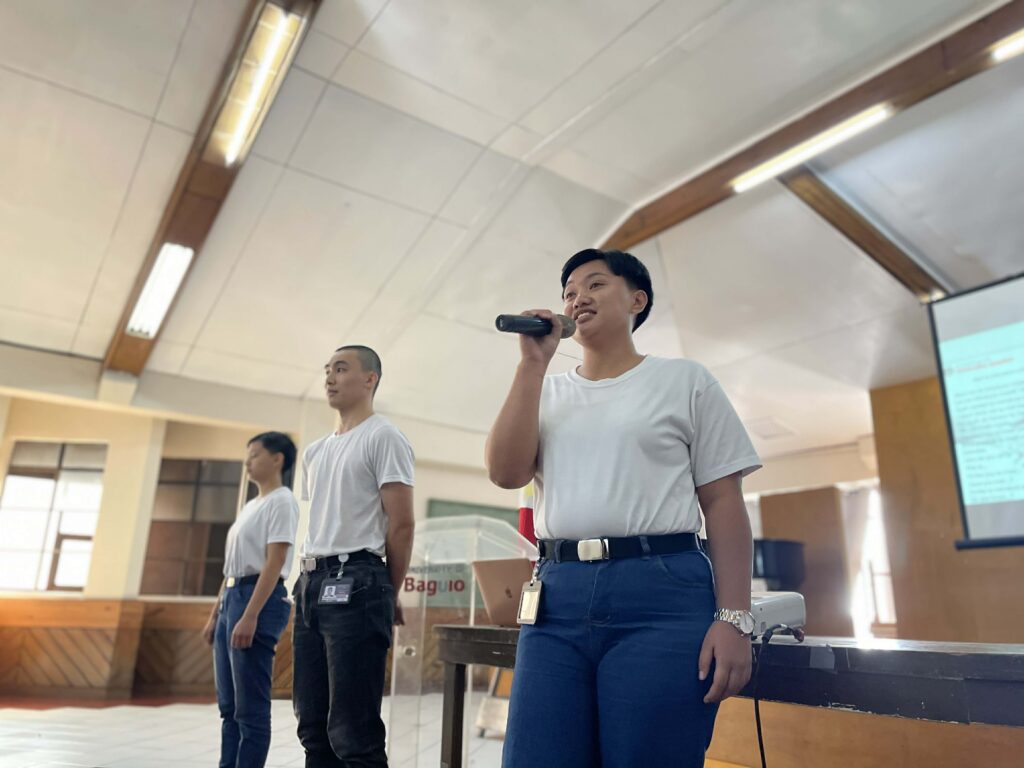

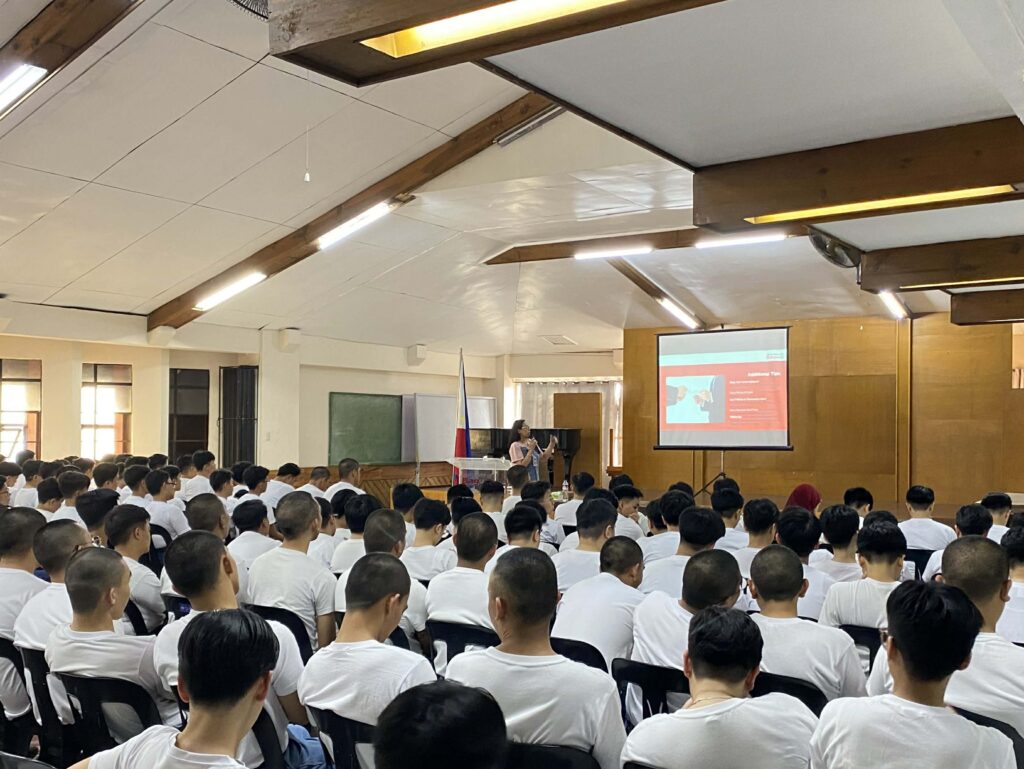
Alt Text: SCJPS Students attending the discussions on proper etiquette and decorum, building on practical skills for law enforcement and forensic science career building
International protocol and digital etiquette discussions were led by esteemed guest speaker, Ms. Melanie Rulla Saro, Linkages Office director. As SCJPS students were invited to participate in exploratory simulations of handling proper and improper online conduct for law enforcers, the interactive demonstrations highlighted the importance of ethical communication in maintaining public trust and fostering institutional credibility and transparency in engagement with the community. Including the various etiquette in law enforcement practices through live demonstrations of greetings, introductions, and handshakes was also given importance.
Practicing Professionalism and Etiquette through Verbal and Non-Verbal Communication
As the event progressed, students actively performed with satisfactory levels, including cultural crowd control and a better understanding of differing perspectives from neighboring countries, which helped the audience understand the importance of awareness, respect, and adaptability when interacting with diverse populations. Further reinforcing inclusion, mutual understanding, and fairness in professional settings.


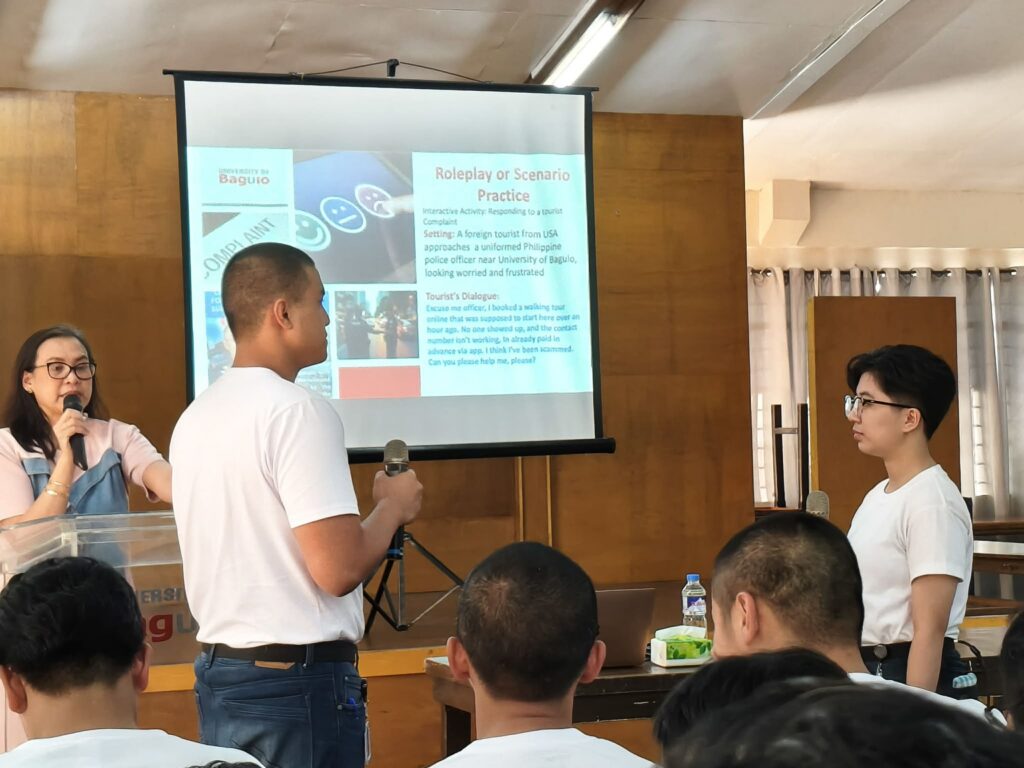
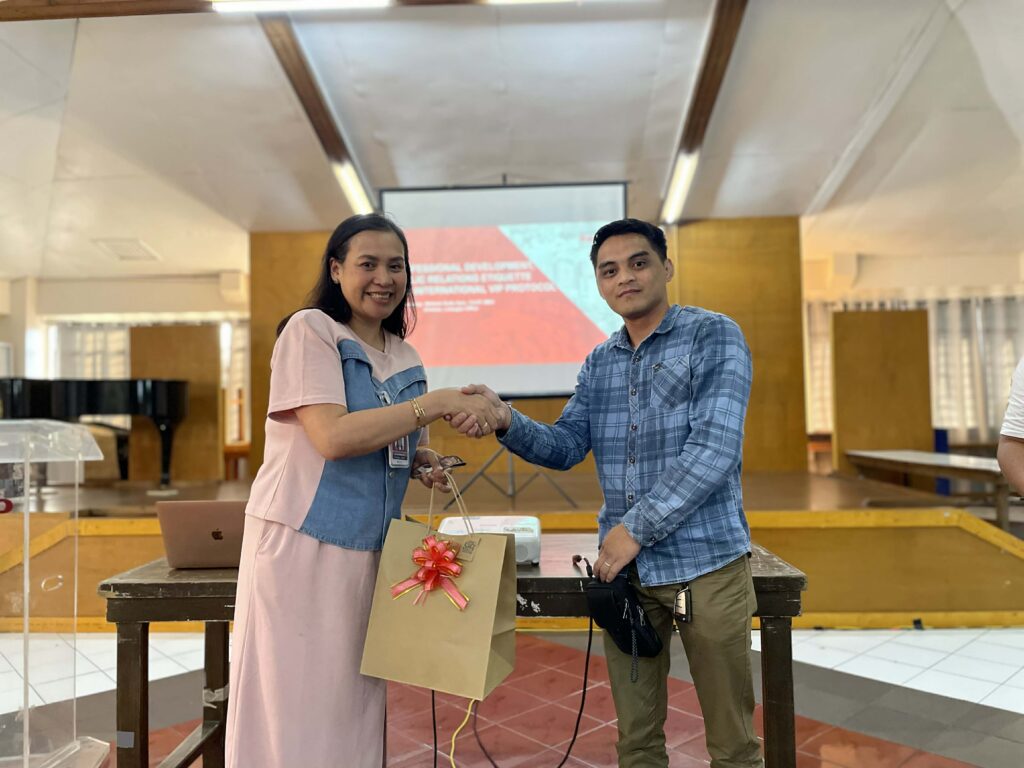
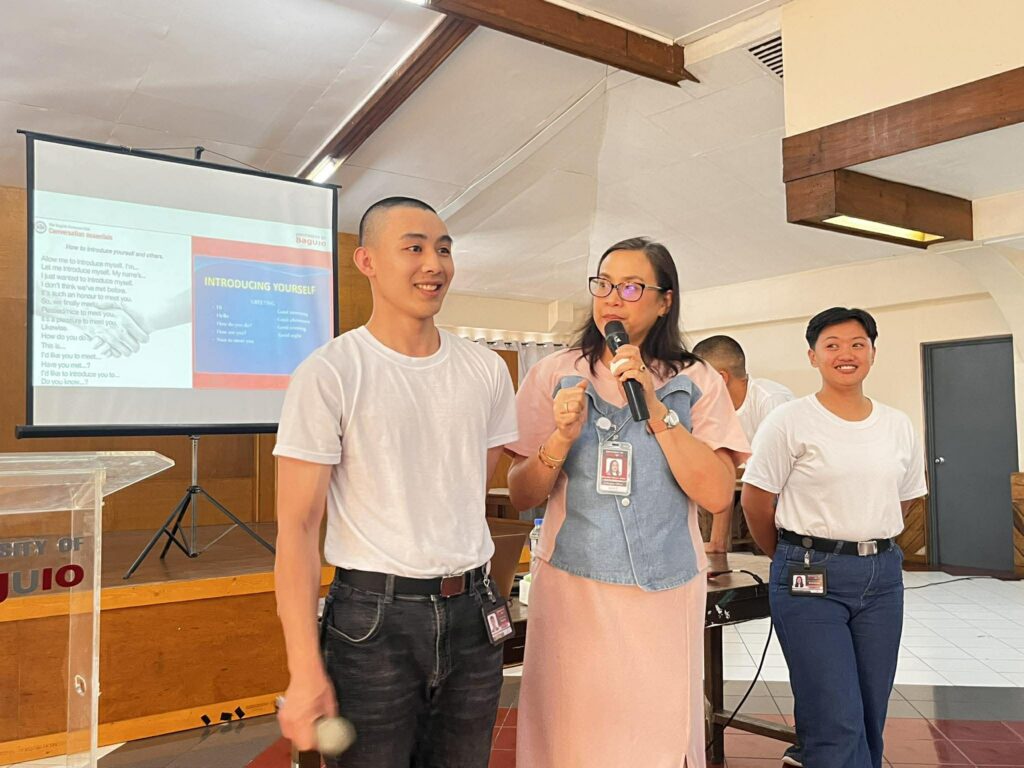
Alt Text: Ms. Melanie Rulla-Saro, Director, Linkages Office, teaching essential ways of professionalism to SCJPS students
Another major component during the session touched base on public relations etiquette and international VIP protocol. Students are immersed in practices of appropriately addressing details and respectful behavior to esteemed leaders, all while observing correct levels and ways of professionalism, institutional integrity, and enlightenment on professional attire that influences confidence, authority, and respectable public perception.
The hands-on activities brought by the seminar promoted continuous learning, responsible engagement, and effective collaboration. As a result of further practical application, a take-home task of rebranding one’s social media accounts (Facebook and LinkedIn), and practicing oral communication professionally were given as a challenge to students to reflect professional standards suitable for a law enforcement or forensic science career
Integrity and Public Perception in an Enlightened Spectrum
Transforming theoretical concepts into actionable steps for students to implement immediately, ensuring the seminar’s lessons extend beyond classroom learning and settings. Observing standards from the UN’s Sustainable Development Goals (SDG), the event expressed:
SDG 4 (Quality Education): through building knowledge and attainment of professional standards needed in law enforcement or forensic science
SDG 10 (Reduced Inequalities): guiding learners to execute institutional integrity and proper adaptability in general, to specific public perception
SDG 16 (Peace, Justice, and Strong Institutions): experiencing a profound sense of awareness, respect, and adaptability when interacting with individuals from all walks of life
SDG 17 (Partnerships for the Goals): seeking the importance of international relations and partnerships from institutions, local, and national partners that can continuously give improvements through practices and protocols in criminal justice and forensic science career paths
—
Written by: Denmark Rey C. Velasco and Florene Naomi A. Ursua
Photographed by: Florene Naomi A. Ursua, Alseiah A. Haluber, Ivy Mae S. Ballesteros, and Nechel M. Wagas
Article Enhancement by: Gabriel Madriaga


